
Amidst the usual notifications of tributes being paid and session requests, I see a recurring theme in my inbox. It is a question that drips with anxiety. It usually sounds like this: “Miss Vex, I have a partner I love, but I am terrified to tell them about my interest in feet. What if they leave me? What if they think I am sick?”
It is tragic, really. I see people willing to spend significant amounts of money to have me command them from a distance, yet they are paralyzed by the thought of having an honest conversation with the person sleeping next to them.
Let’s be clear: silence is expensive. It costs you intimacy, it costs you authenticity, and eventually, it creates a wall. In my line of work, I deal with the rawest forms of human desire. I know that how to admit to a fetish is not just about saying the words; it is about the “psychological theater” you build around those words.
So, put down the shame. It is boring and unproductive. Instead, let’s look at this strategically. You want to bring your desire into the light without burning the house down. Here is how you do it.
The Psychology of the “Big Reveal”: Why Are You So Afraid?
Before we discuss tactics, we must address the internal sabotage. Why does your throat tighten when you think about mentioning feet? It is because society has done a terrible job of educating people about sexuality. You have internalized the idea that your desire is a “glitch.”
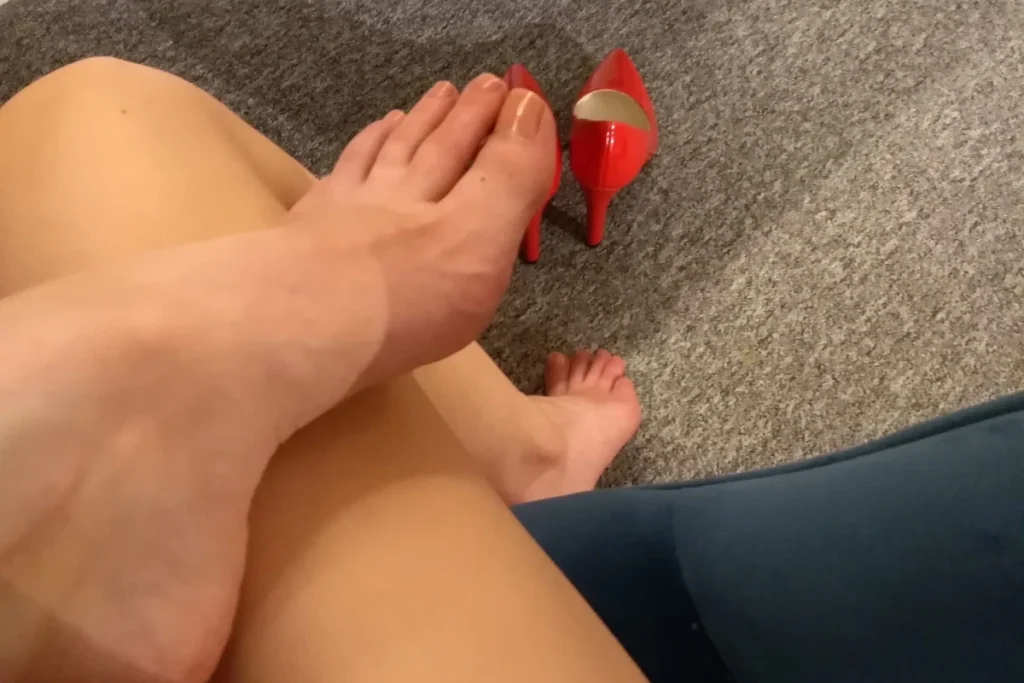
You Are Not a Deviant, You Are Just Wired Differently
If you approach your partner trembling like a criminal confessing to a bank robbery, they will react as if you have committed a crime. Emotions are contagious. If you project shame, they will reflect disgust.
You must remember the facts I have written about before, about the science behind foot fetish. Dr. V.S. Ramachandran’s theory regarding the somatosensory cortex explains that the foot area of the brain is neighbor to the genital area. Cross-wiring happens. It is biology, not madness. Statistically, podophilia is the most common non-genital sexual interest globally. You are not “weird”; you are statistically probable.
When you prepare for this conversation, you must internalize this validity. You are not asking for forgiveness for a sin. You are inviting your partner into a new room of your internal house. If you walk into that room with confidence, they are much more likely to follow.
The Fear of Rejection vs. The Need for Authenticity
I understand the fear. You value your relationship, and the risk of the “wrong” reaction to a foot fetish feels catastrophic. However, consider the alternative. A relationship based on hiding a core part of your erotic identity is a relationship with a ceiling. You can never truly be vulnerable if you are constantly editing yourself.
Authenticity is magnetic. Even if your partner does not share the fetish, they can often respect the honesty. The goal is not necessarily to turn them into a fellow fetishist instantly; the goal is to stop hiding.
Strategic Timing: The “Neutral Ground” Protocol
In my sessions, timing is everything. A command given too early is ignored; a command given too late loses its power. The same applies to talking about sexual fantasies. Most people make the mistake of choosing the worst possible moment.
Never Confess During Orgasm
Do not—I repeat, do not—bring this up in the heat of the moment during sex. It is a rookie mistake. When you are in the middle of intimacy, expectations are high, and the brain is focused on immediate sensation.
If you suddenly grab their foot or whisper a confession while adrenaline is high, you risk breaking the flow. It can be jarring. The partner might feel confused or pressured to perform instantly. You want a discussion, not a knee-jerk reaction.
Coffee, Wine, and Safety
The conversation should happen on neutral ground. Choose a moment when you are both relaxed, clothed, and feeling connected emotionally, not just physically. A quiet evening with a glass of wine (I recommend a dry Riesling) or a Sunday morning over coffee.
This setting signals safety. It tells your partner: “I want to share something with you because I trust you, not because I am demanding sex right now.” It lowers the stakes. It creates a space for questions rather than reactions.
The Script: How to Talk About Sexual Fantasies Without Apologizing
Words are tools. Use the wrong tool, and you break the machine. Avoid clinical terms like “podophilia” or intense slang that you might find on the internet. Keep it grounded in romance and sensation.
Framing it as “Aesthetics” and “Sensory,” Not “Obsession”
Do not start by saying, “I have a foot fetish.” That label carries too much baggage from pop culture ridicule. Instead, describe the feeling.
Say something like:
“I’ve realized that I’m really responsive to certain sensory things. I find the shape of your legs and feet incredibly beautiful. It’s a huge turn-on for me.”
Do you see the difference? You are framing it as an appreciation of their body. You are complimenting them. You are talking about beauty, arch, shape, and skin. This is the language of aesthetics, which is much easier for a “vanilla” partner to understand and accept than the language of hard-core fetishism.
Debunking the “Dirty” Myth Immediately
We must address the elephant in the room. When people hear “feet,” they often think “sweat” or “bacteria.” It is an unfortunate association.
Anticipate this reaction to a foot fetish. Early in the conversation, clarify your boundaries regarding hygiene.
You might say: “I know it sounds specific, but for me, it’s about the elegance of it. I love it when you’ve just taken care of yourself, or when your skin is soft after a shower.”
By emphasizing cleanliness and grooming, you reassure them that you are not asking for something unhygienic. Unless, of course, you are into natural odors—but I strongly advise saving that conversation for a much later date (University level) after you have passed the entrance exam.
The Art of Gradual Escalation: Actions Speak Louder
Sometimes, words are too heavy. In my work as a Domina, I often find that non-verbal communication establishes power dynamics faster than a speech. In a relationship, non-verbal cues can bridge the gap between “weird” and “pleasurable.”
The Massage as a Gateway
The foot massage is the Trojan Horse of the fetish world—except it brings pleasure, not soldiers.
Offer a massage without any expectation of sex. Just service. This is a concept I teach my subs constantly: there is power in service.
“You’ve had a long day. Let me rub your feet while we watch this movie.”
This accomplishes three things:
- It normalizes your touch in that area.
- It gives the partner physical pleasure and relaxation.
- It allows you to interact with the object of your desire in a socially acceptable way.
If you do this well, your partner will start associating your touch on their feet with relief and endorphins. You are conditioning them positively. Over time, you can add more sensuality—a kiss on the instep, a slower caress. It is a dance, not a race.
Reading the Body Language
You must be calibrated. If they pull away or tense up, stop. Do not push. Respect the boundary immediately. This builds trust. If they relax and lean into it, you have a green light to continue.
And how to do it? Learn more about the Art of Foot Worship.

Navigating the Outcome: Boundaries and Consent
You have had the talk. You have offered the massage. Now, you must deal with the reality of their response.
What If They Say “Maybe”? (The Method of Small Steps)
Often, a partner will not say “Yes, I love this!” immediately. They might say, “That’s interesting,” or “I guess we can try.” This is a victory. Do not rush to buy latex socks or demand trampling.
Start small. Ask to incorporate feet into foreplay. Ask if they would wear a specific pair of heels or socks during intimacy. Treat their “maybe” as a precious resource that must be cultivated, not exploited.
Respecting the Hard “No”
We must be realistic. Some people have a strong aversion to feet (podophobia) or simply have zero interest in exploring this. If your partner listens to you and says, “I love you, but I am really uncomfortable with that,” you have a choice.
You must respect their “No.” Do not nag. Do not whine. Consent is the bedrock of everything I do, and it must be the bedrock of your relationship. If they say no, you can still have a fulfilling relationship, or you may decide this compatibility issue is too large. But you cannot coerce desire. That is not how the psychological theater works.
Vulnerability is Power
Talking about sexual fantasies is terrifying because it hands someone the weapon to hurt you. But it also hands them the key to truly know you.
If you approach this with confidence, frame it as an aesthetic appreciation of their body, and ensure hygiene and comfort are priorities, the chances of a positive outcome are high. Remember, you are not admitting to a crime; you are sharing a map of your pleasure.
And if you find yourself struggling, or if your partner is open but you don’t know how to proceed… well, that is what professionals like me are for. Sometimes, paying for guidance—or a demonstration of proper worship dynamics—is the best investment for your personal life.
Now, finish your wine and go talk to them. The silence is costing you too much.

I am Miss Vex. I specialize in psychological control and the aesthetics of submission. My power lies in precision. Here, money is a vehicle for meaning. Welcome to my laboratory of desire—where your surrender becomes art.
Related Articles



Post Comments