
Let us be honest for a moment. You have likely spent a significant amount of money—perhaps a tribute equal to a week’s wages—on a piece of leather. Maybe it is a bespoke corset, a pair of thigh-high boots that click with authority, or a hood designed to silence the noise of the outside world. You bought it for the aesthetic, for the power, or perhaps for the exquisite feeling of helplessness it provides.
But here is the tragedy I witness all too often: you wear it, you sweat in it, and then you throw it into the back of a closet like a piece of fast fashion.
This is unacceptable.
Leather is not synthetic fabric. It is skin. It was once alive, and in a way, it still possesses a memory. It reacts to heat, moisture, and neglect. If you treat it poorly, it will stiffen, crack, and die. And there is nothing sadder in my line of work than seeing a magnificent piece of engineering ruined by simple laziness.
In this article, we will move from the theory discussed in my analysis of leather psychology to the practical reality of the leather fetish. We are going to discuss the chemistry of care, the tools of the trade, and the mindset required to maintain your equipment. Consider this your lesson in discipline.
Why Fetish Leather Requires Special Treatment
To understand how to care for something, you must first understand its nature. Regular fashion leather—a jacket you wear to walk the dog—faces rain and wind. Fetish leather faces a much more intense environment: the human body in a state of high arousal.
The Stress of the Session: Sweat, Lubricants, and Tension
When you engage in a scene, your body temperature rises. You perspire. Sweat is saline; it is acidic. When salt permeates the pores of leather, it draws out the natural oils that keep the material flexible. Over time, this acts like a slow poison, drying the fibers from the inside out.
Furthermore, our playtime often involves other substances. Silicone or water-based lubricants, massage oils, wax, and makeup often find their way onto the gear. If left uncleaned, these substances can degrade the finish or, worse, become a breeding ground for bacteria. Leather is organic; it can mold. Putting on a moldy hood is not “edgy”—it is a health hazard.
The Breath of the Beast: Understanding Pores and Structure
Leather needs to breathe. It sounds poetic, but it is a biological fact. The collagen fibers that make up the skin need to retain a certain level of moisture (but not wetness) to remain elastic.
When you encase yourself in a catsuit or cinch a corset, you are stretching these fibers to their limit. If the leather is dry, those fibers will snap. This appears as micro-cracks on the surface. Once leather cracks, there is no going back. You cannot “heal” a dead scar. You can only prevent it. This is why the distinction between cleaning and conditioning is vital—a topic we will explore in depth, differentiating it from the care of synthetic alternatives in future discussions.
This is the key difference between a natural product and synthetic alternatives that you need to know before purchasing.
Essential Tools for Your Leather Care Kit
You cannot perform a surgery with a butter knife, and you cannot maintain high-quality leather with dish soap. If you try to clean your £300 collar with harsh kitchen detergents, you deserve the ruin that follows.
Build your kit. Think of it as an altar to your aesthetic.
Cleaning Agents: Saddle Soap and Beyond
The gold standard has always been saddle soap. It is designed for equestrian gear—saddles and bridles that face mud, horse sweat, and rain. It is robust enough to clean but gentle enough not to strip the color.
However, for more delicate fashion leather (like fine lambskin gloves), a dedicated pH-balanced leather cleaner is preferred. Avoid anything containing alcohol or heavy solvents. Alcohol dries skin. You wouldn’t wash your face with turpentine; do not do it to your gear.
Nourishment: Conditioners, Oils, and Creams
Cleaning removes dirt, but it also removes some natural oils. You must replace them.
- Leather Oil (like Neatsfoot): Good for softening heavy, stiff leather (like new boots or heavy bondange belts), but can darken the color.
- Leather Conditioner/Cream: The standard choice. It penetrates the pores to keep the fibers supple.
- Polish: This is purely aesthetic. Polish sits on top to create shine. It does not feed the leather. Do not confuse the two.
The Soft Cloth: Tools of the Trade
You need two types of cloths.
- Application Cloths: Soft cotton rags (old t-shirts work perfectly) for applying soap and conditioner.
- Buffing Cloths: A high-quality microfiber cloth or a horsehair brush to buff the leather to a high shine.
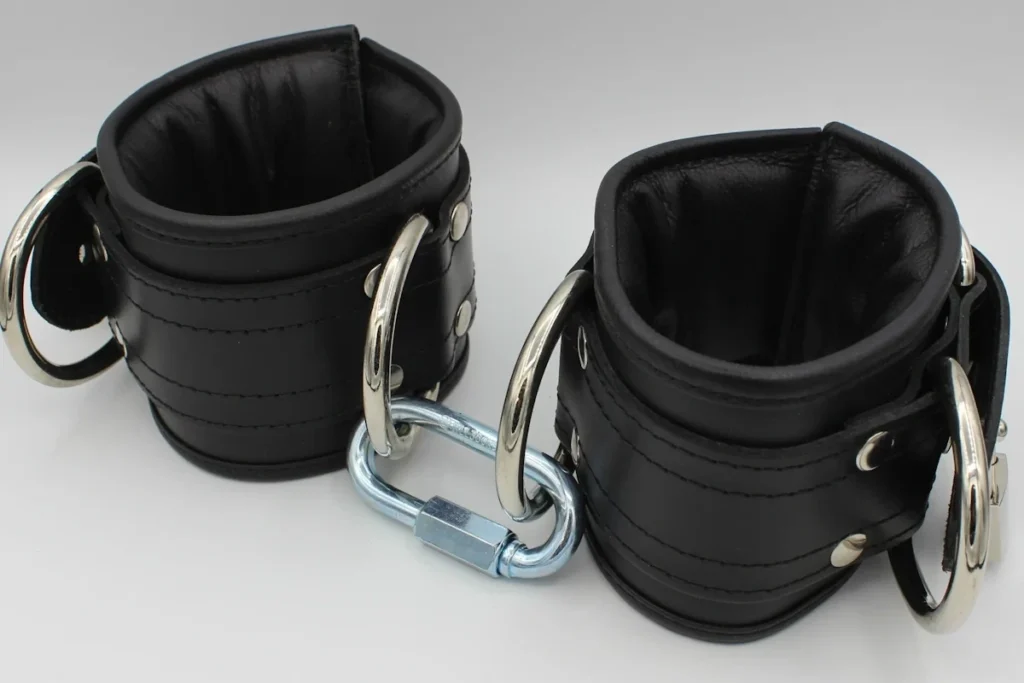
The Protocol: A Step-by-Step Guide to Cleaning and Conditioning
This is not a suggestion. This is a procedure. Follow it precisely.
Step 1: Purification (Cleaning)
After a session, your gear is likely damp and covered in the invisible residue of the scene.
- Wipe Down: Immediately after use, wipe the leather with a slightly damp (not wet) soft cloth to remove surface salts and fluids.
- The Soap: Dampen your sponge or cloth and rub it into the saddle soap to create a lather. Apply it to the leather in circular motions. You are lifting the dirt out of the grain.
- The Removal: Wipe away the lather with a clean, damp cloth. Do not rinse the leather under a tap. Never soak it.
- Drying: Allow the leather to air dry naturally. Never use a hairdryer, radiator, or direct sunlight. Heat will cook the collagen fibers and turn your soft corset into hard cardboard. Patience is a virtue—practice it.
Step 2: Resurrection (Conditioning)
Once the leather is dry to the touch, it is thirsty. It needs to be fed.
- Test: If you are using a new product, test a tiny amount on an invisible area (inside a hem) to ensure it doesn’t stain.
- Massage: Apply a small amount of conditioner to your cloth. Rub it into the leather using circular, hypnotic motions. Imagine you are massaging a lover’s stiff muscles. You want the product to penetrate deep into the material.
- Rest: Let the leather sit for 15-20 minutes (or overnight for heavy gear) to absorb the nutrients.
- Wipe Off: If there is excess conditioner sitting on the surface, wipe it off gently.
Step 3: The Aesthetic Finish (Polishing)
This is where the magic happens. This is where you transform a piece of clothing into a symbol of perfection.
Using a clean microfiber cloth or brush, buff the leather rapidly. The friction creates a tiny amount of heat, which helps the waxes settle and creates that glass-like, intimidating shine. A properly polished boot should reflect the room around it—and the face of anyone kneeling before it.
Psychology of Care: Maintenance as a Meditative Ritual
Now, let us elevate this discussion. I am Miss Vex, after all; I am not here simply to teach you housekeeping.
There is a profound psychological component to caring for your gear. In the BDSM dynamic, we often talk about “service.” Service is not always about sexual gratification. Sometimes, service is silent, solitary work.
Service Through Action
For a submissive, cleaning their Dominant’s boots or caring for the cuffs that restrained them is a powerful act of devotion. It allows you to relive the scene in a safe, quiet headspace. As you polish the leather, you are acknowledging the power exchange that occurred. It is a way to process the “sub drop” (the emotional crash that can happen after a scene) by engaging in a repetitive, grounding task.
For the Dominant, maintaining gear is an act of respect for the tools of their craft. A Dominant with scuffed, dirty boots projects carelessness. A Dominant with mirror-shined gear projects precision, control, and high standards.
Attention to Detail as a Character Trait
How you do one thing is how you do everything. If I open a client’s bag and see a crumpled, dry leather harness, I immediately know something about their mind. I know they are impulsive, focused only on the “rush” and unwilling to put in the work required for longevity.
Discipline is not just about taking pain or giving orders. Discipline is doing the boring work when no one is watching. It is the quiet dedication to excellence.
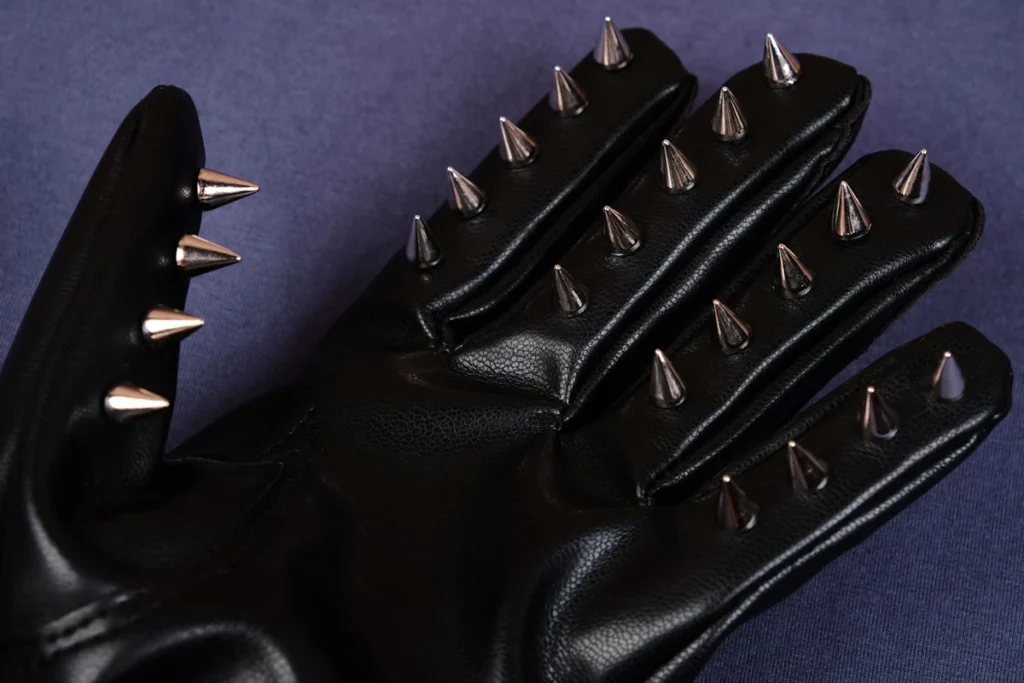
Storage and Longevity: The Resting Phase
You have cleaned it. You have fed it. You have polished it. Do not ruin it now by throwing it on the floor.
Environment Matters: Temperature and Humidity
Leather is like Goldilocks—it hates extremes.
- Too Humid: It will grow mold. (If this happens, kill it with a vinegar solution immediately, but prevention is better).
- Too Dry: It will crack.
- Too Hot: It will warp.
Store your gear in a cool, dry place. Ideally, use a breathable garment bag. Never store leather in plastic bags for long periods; plastic traps moisture and chemicals, suffocating the skin.
Hanging vs. Rolling: Preserving the Shape
Gravity is cruel.
- Heavy Coats and Corsets: Use wide, padded hangers. Thin wire hangers will dig into the shoulders or hips, leaving permanent dents and deforming the structure.
- Long Items (Bullwhips, Floggers): Hang them straight down to keep the strands aligned.
- Soft Leather: If you must pack it, roll it. Do not fold it. Folds create creases, and creases eventually become cracks.
Caring for Leather is a Transaction
You give it time, patience, and high-quality nutrients. In return, it gives you beauty, durability, and that unique, intoxicating scent that signals the beginning of a scene.
Whether you are a submissive seeking to serve or a Dominant maintaining your armory, remember this: The state of your gear is a reflection of your state of mind. Do not let either fall into disrepair.
Treat your leather with the same reverence you would treat my instructions. Anything less is simply a waste of potential.

I am Miss Vex. I specialize in psychological control and the aesthetics of submission. My power lies in precision. Here, money is a vehicle for meaning. Welcome to my laboratory of desire—where your surrender becomes art.
Related Articles


Post Comments